
Behaviour Strategy Without Culture Is Just Control
Feb 27, 2026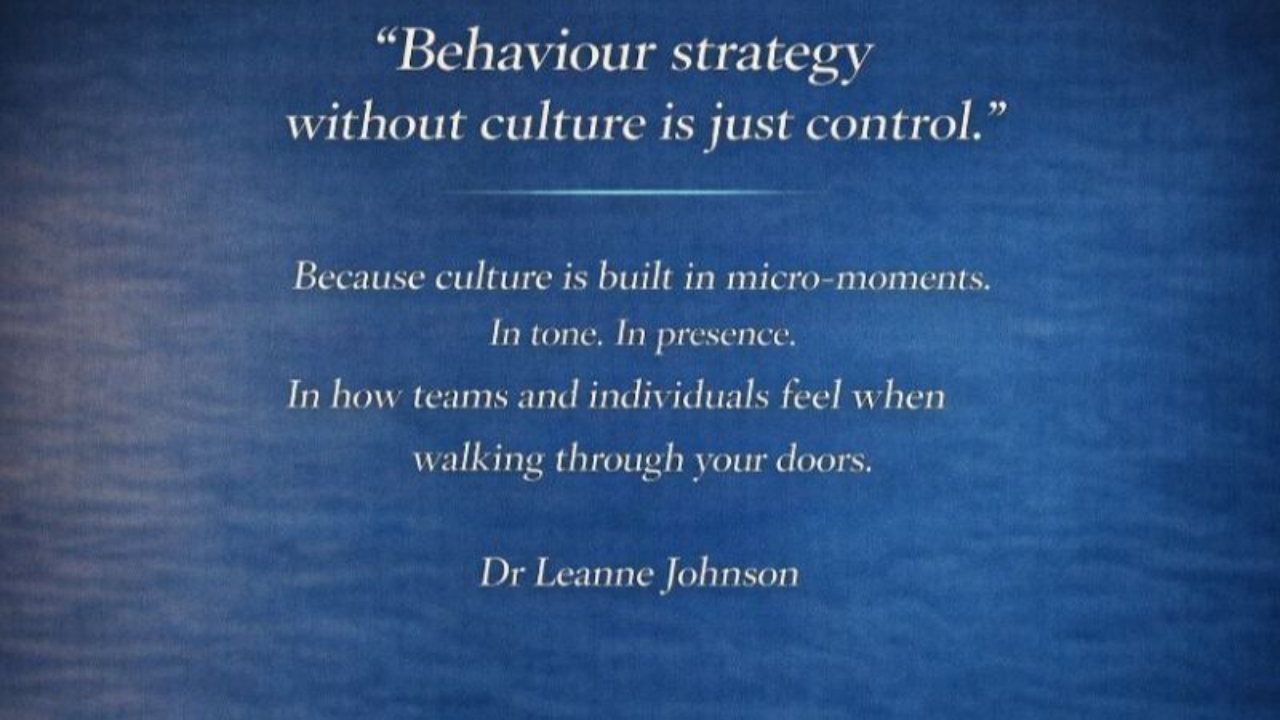
End of week one - After a half-term, can be an interesting one.
In schools, residential settings, and services, it’s natural at this point to start analysing behaviour.
Who struggled.
Who pushed boundaries.
Which systems need tightening?
Which expectations need reinforcing?
The data will always be there. Attendance percentages. Behaviour logs. Incident reports. Patterns to scrutinise.
But behaviour isn’t the starting point.
Culture is.
What Did It Feel Like to Walk Through Your Doors?
When adults and young people walked through your doors this week, something far more important than behaviour data was forming.
They were scanning.
Not consciously. Not strategically. But instinctively.
Silently, their nervous systems were asking:
-
Am I safe here?
-
Do I matter here?
-
Will someone steady me if I wobble?
These questions sit underneath every interaction. Every lesson. Every correction. Every greeting at 8:30 am.
And the answers to those questions shape behaviour long before any policy does.
Behaviour Flows From Belonging
We often talk about behaviour as something to manage.
But behaviour flows from belonging.
And belonging flows from leadership.
Leadership doesn’t just show up in vision statements or behaviour frameworks. It shows up in tone.
-
Whether we shame or support.
-
Whether we escalate or enquire.
-
In the look on our faces at the classroom door.
-
In the way we respond when something goes wrong.
Culture is not built in staff meetings.
It is built in micro-moments.
Culture Is Cumulative
Every small interaction either builds safety or erodes it.
A raised eyebrow.
A softened voice.
A public reprimand.
A quiet, regulated conversation.
Individually, they may seem insignificant. Collectively, they form the emotional climate of a setting.
And emotional climate determines capacity.
When young people feel psychologically safe, their nervous systems settle. When they feel a threat, even a subtle threat, behaviour becomes protective.
That’s not defiance.
That’s survival.
Before You Adjust Policy, Pause
As you move into next week, before tightening systems or revising behaviour strategy, pause and reflect.
Two simple questions:
1️⃣ In the first 10 minutes of the day, what did pupils and staff experience — warmth or pressure?
The beginning of the day sets the emotional temperature. Was it calm? Connected? Predictable? Or rushed and corrective?
2️⃣ When something went wrong this week, did the response create more fear — or more safety?
Every rupture is an opportunity. Not to assert control, but to build trust.
The Leadership Lens
It’s easy to refine the strategy.
It’s harder — and braver — to examine culture.
Because culture asks us to look at ourselves.
Our tone.
Our regulation.
Our consistency.
Our relational capacity under stress.
You can design the most comprehensive behaviour strategy in the world.
But without a culture of safety, belonging, and relational steadiness, it becomes control.
And control may suppress behaviour temporarily — but it rarely creates long-term change.
Get Culture Right and Behaviour Becomes Easier
When adults feel supported, they regulate more easily.
When young people feel safe, they engage more readily.
When belonging is strong, correction feels containing rather than rejecting.
Culture does the heavy lifting.
So the real question at the end of week one isn’t:
“How do we tighten behaviour?”
It’s:
“What did it feel like to be here?”
Because that feeling is what determines everything that follows.
